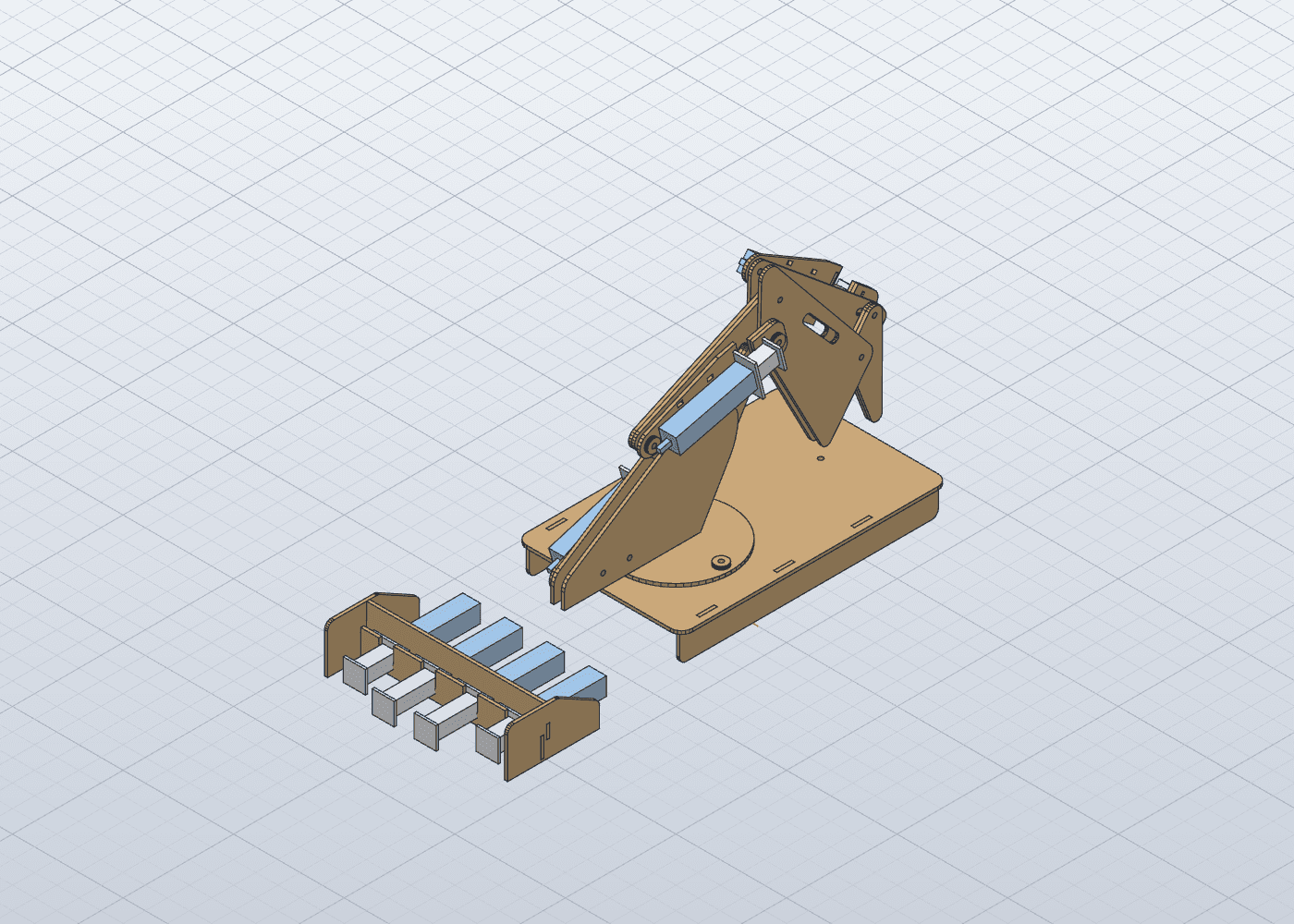
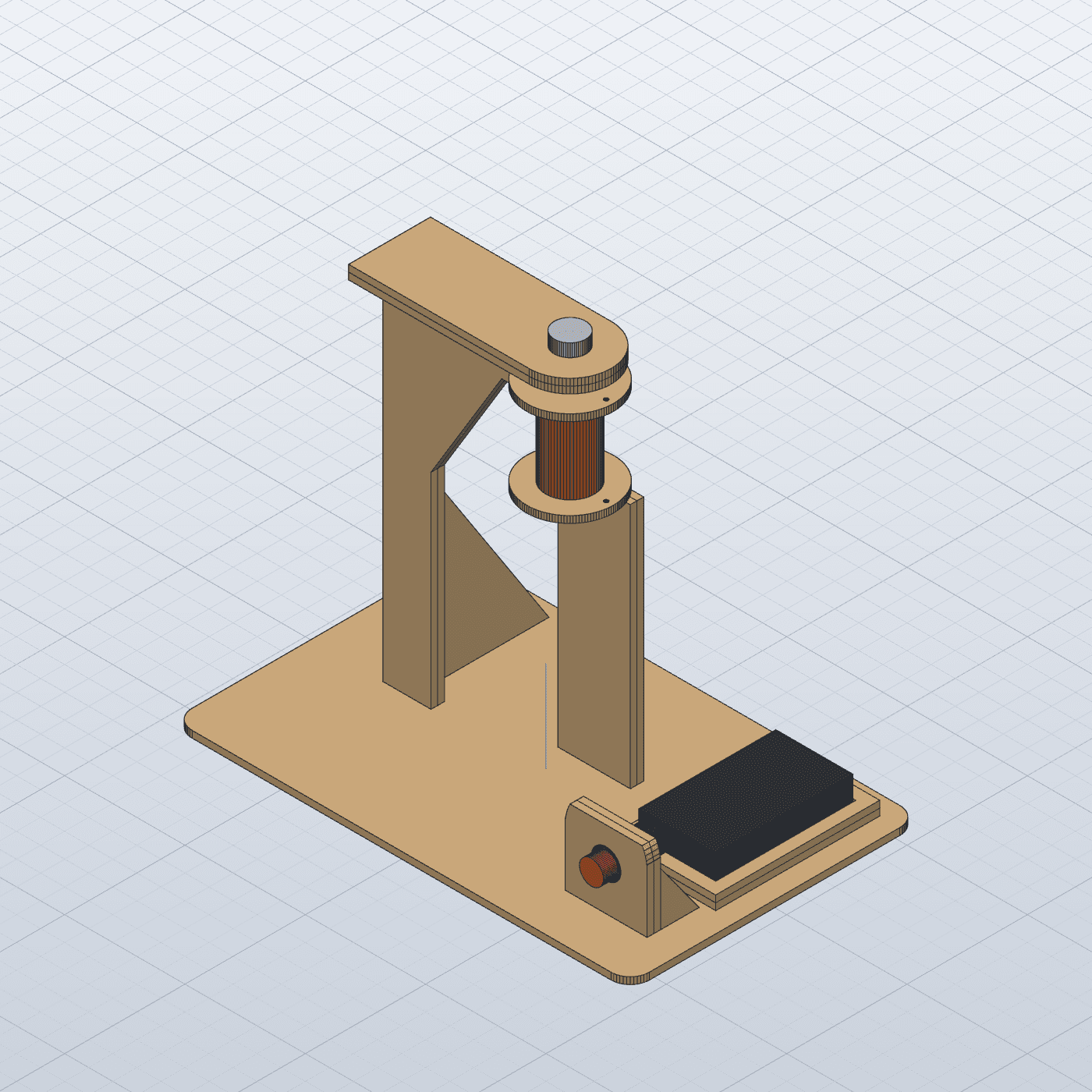
Crank-a-Light: Make Light with Your Arm and Wooden Gears
Turn a wooden crank, a 75:1 wooden gearbox spins a small motor backwards as a generator, and two LEDs light up: red one way, yellow the other. No batteries and no soldering by pupils. For Primary 1 to 6.
Project Overview
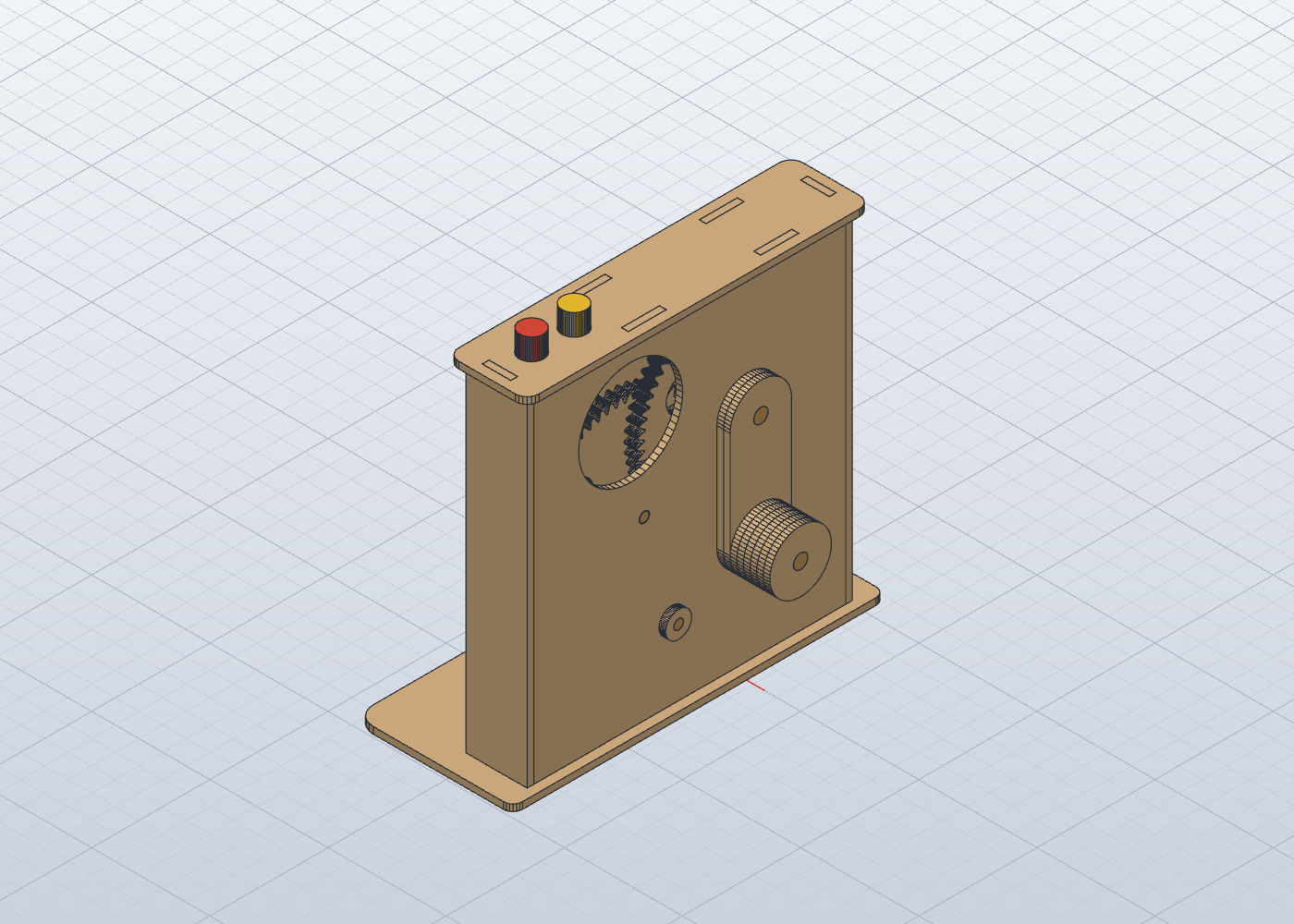
Pupils turn a wooden crank, and three stages of wooden gears spin a small motor backwards, so it works as a generator. Two LEDs on the lid light up: red when you crank one way, yellow the other way. There are no batteries, no coin cells and no soldering by pupils: the only power is the child's arm.
"Turn faster, and it gets brighter" comes out on its own, which is the main lesson. A window in the side shows the big gears turning at different speeds.
Designed and checked, not built yet
Every part, fit and motion in this kit was checked by script, but nobody has built one yet. Part sizes are typical values: measure yours and cut the fit test before the full sheets.
At a glance
| Specification | Value |
|---|---|
| Size | About 90 x 157 x 158 mm with base and crank |
| Gears | 60T to 12T, 60T to 12T, 36T to 12T = 75 : 1 |
| Generator | "130" DC motor run backwards, about 0.4 V per 1,000 rpm (measure yours) |
| Light | Red and yellow 10 mm LEDs back to back, 47 ohm in series |
| Wood | 32 parts on two 300 x 300 mm sheets |
| Price | ₦30,000 per box (Build Box, see Subscribe) |
| Class | Primary 1 to 6 |
Why 75 : 1
A red LED needs about 1.8 V before it lights, so the motor must spin at about 4,500 rpm, and a small child turns a crank one or two times a second.
| Crank | Motor | Volts | LED |
|---|---|---|---|
| 0.5 turn/s | 2,250 rpm | 0.9 V | dark |
| 1 turn/s | 4,500 rpm | 1.8 V | just glows |
| 1.5 turns/s | 6,750 rpm | 2.7 V | lit |
| 2 turns/s | 9,000 rpm | 3.6 V | bright |
What it teaches
| Class | What pupils do | What they learn |
|---|---|---|
| Primary 1-2 | Turn the crank and watch the light. Turn it the other way. | Our arms can make light. Faster is brighter. Backwards changes the colour. |
| Primary 3 | Mark the gears, turn slowly and count turns. Plug the LEDs in. | Small gears turn faster than big ones. Movement becomes electricity, then light. |
| Primary 4-6 | Build the gearbox. Count teeth: 5 x 5 x 3 = 75. | Gear ratios. A motor turned backwards is a generator, like the ones that make NEPA power. |
Downloads
| File | Use |
|---|---|
| Fit test G-code | Cut this first (209 x 48 mm) |
| Sheet 1 G-code | Engrave, then cut |
| Sheet 2 G-code | Engrave, then cut (about half empty) |
| CAD files | STEP model, SVG and DXF sheets |
🛒 Materials Needed
- 2 sheets of 2.8 mm plywood, 300 x 300 mm
- "130" DC motor (3-6 V), used as a generator
- 10 mm red LED and 10 mm yellow LED
- 47 ohm resistor
- Dupont jumper wires and heat-shrink (to make the plug, done in advance)
- 6 mm wooden dowel, about 70 mm
- 4 mm dowel or bamboo skewer, about 70 mm
- Clear plastic film, 50 x 50 mm (cut from a clean bottle)
- Wood glue, CA glue, hot glue
📋 Step-by-Step Instructions
Cut Fit test G-code first and check:
- the motor can fits the D-shaped hole, and its boss fits the round hole next to it;
- each dowel turns freely in its free hole and grips in its glue hole;
- the 12T and 36T test gears turn smoothly on two dowels;
- the small ring presses onto the motor shaft;
- a 10 mm LED fits its hole, and the test tab fits its slot.
All 4 steps completed — great work!